
What Is Baker's Percentage?
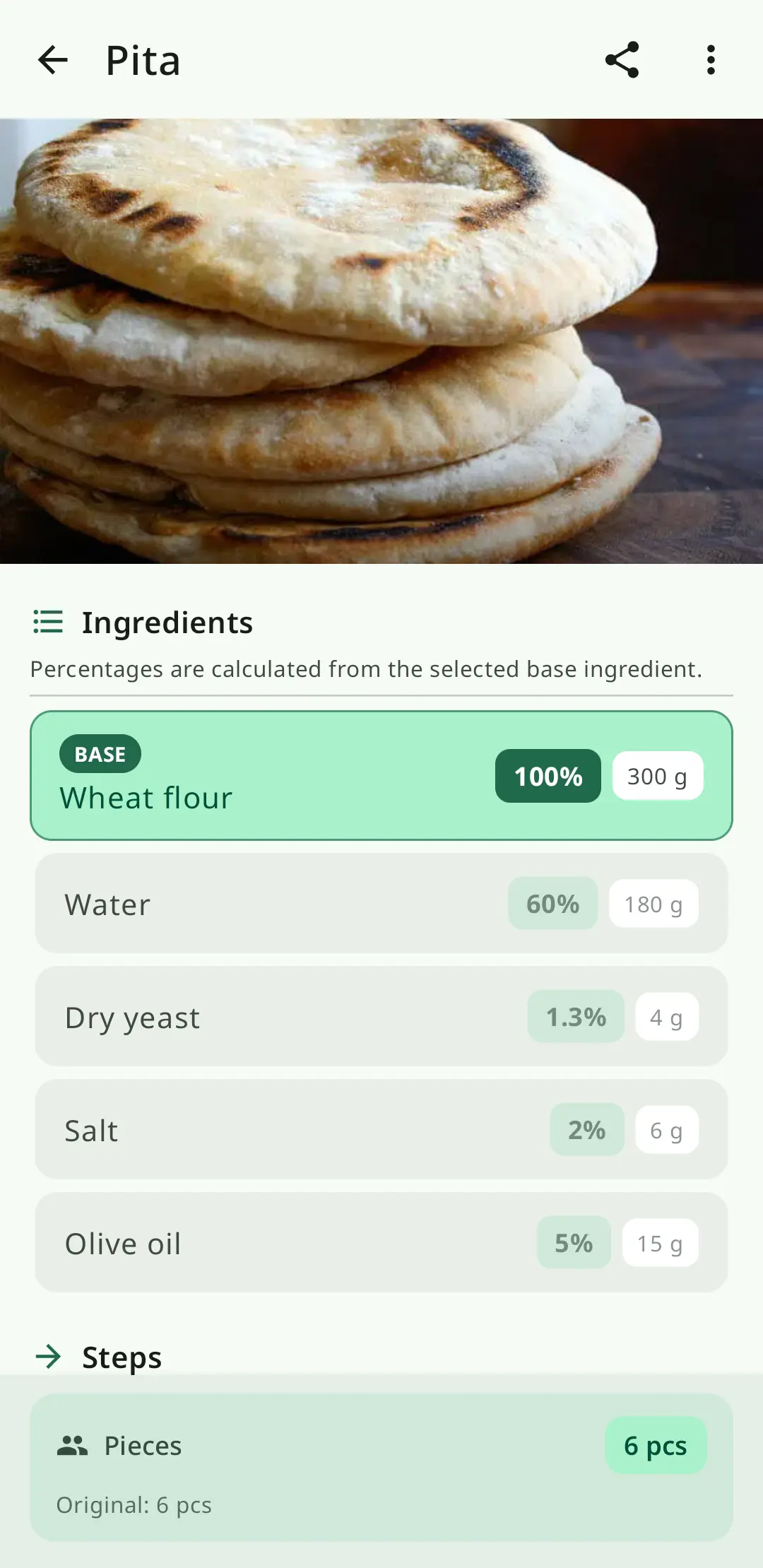
In baker's percentage (also called baker's math or baker's ratio), every ingredient in a recipe is expressed as a percentage of the total flour weight, where flour = 100%.
This means:
- The total of all baker's percentages will always exceed 100% (because water, fat, and other ingredients add to flour).
- To calculate any ingredient's baker's percentage: % = (ingredient weight ÷ flour weight) × 100
- To calculate ingredient weight from a percentage: weight = (percentage ÷ 100) × flour weight
For example, a simple white bread formula using 500g flour:
- Flour: 500g = 100%
- Water: 350g = 70%
- Salt: 10g = 2%
- Yeast: 5g = 1%
This is a 70% hydration bread with 2% salt and 1% yeast. These percentages are meaningful to any baker worldwide — the amounts can change but the ratios stay the same.
Why Bakers Use Percentages Instead of Volumes
The baker's percentage system solves several problems that cup and volume measurements cannot:
Perfect Scaling at Any Batch Size
To scale a recipe using baker's percentages, simply change the flour weight and recalculate all other ingredients from their percentages. If your standard loaf uses 500g flour at 70% hydration, and you want to make a 200g test loaf, you use 200g flour and 140g water (70% of 200g). No scaling factor arithmetic needed.
Comparing Recipes Instantly
Two sourdough recipes may look completely different in absolute quantities but have identical hydration and salt ratios. Baker's percentages let you compare recipes at a glance — you can immediately see that one bread formula is drier (65% hydration) versus another (78% hydration) without parsing specific gram amounts.
Understanding What Changes Texture
Baker's percentages reveal the structure of a recipe. High-hydration doughs (>80%) make open-crumb artisan loaves. Enriched doughs have 10–20% fat and 5–15% sugar. Classic croissant dough has around 15% butter; a brioche might have 40–80% butter. These percentages explain texture and guide adjustments.
Key Baker's Percentage Ranges
Understanding typical percentage ranges for common ingredients helps you recognize and modify recipe structures:
| Ingredient | Lean Bread | Enriched Bread | Pastry / Cake |
|---|---|---|---|
| Flour | 100% | 100% | 100% |
| Water / liquid | 60–80% | 45–60% | 30–60% |
| Salt | 1.8–2.2% | 1.5–2% | 0.5–1% |
| Yeast (dry) | 0.5–1.5% | 1–2% | — |
| Butter / fat | 0–5% | 8–20% | 40–100% |
| Sugar | 0–5% | 5–15% | 50–100% |
| Eggs | — | 10–20% | 20–60% |
Baker's Percentage for Sourdough
Sourdough adds one complication to baker's percentage: the starter contains both flour and water, which contribute to the recipe's total flour and liquid ratios.
To correctly calculate sourdough baker's percentages:
- Determine your starter's hydration (e.g., 100% hydration = equal flour and water by weight).
- Calculate how much flour and water are in your starter quantity.
- Add the starter's flour to the main flour total and its water to the main water total.
- Calculate all percentages based on the combined flour weight.
RecipeFlow handles this automatically when you designate an ingredient as a starter with a specified hydration percentage.
How RecipeFlow Calculates Baker's Percentage
In RecipeFlow, any recipe with a flour ingredient can display baker's percentages alongside or instead of standard quantities. The app:
- Identifies the flour (or total flour blend) as the 100% base.
- Calculates every other ingredient's weight as a percentage of total flour.
- Displays results alongside standard gram quantities.
- When you change the flour weight, all quantities update proportionally.
This makes RecipeFlow a complete baker's percentage calculator that works within your existing recipe collection — no separate tool required.