

How Recipe Nutrition Calculation Works
Calculating recipe nutrition requires a nutritional database that contains the calorie and macro content per 100g for each ingredient. The formula:
ingredient nutrition contribution = (ingredient weight in grams ÷ 100) × nutrient value per 100g
Sum these values across all ingredients for the total recipe nutrition. Divide by the number of servings for per-serving values.
The accuracy of this calculation depends on:
- Ingredient weights being in grams (volume measurements introduce variability)
- The nutritional database used (raw vs. cooked values differ significantly)
- Cooking method (fat added during cooking, moisture loss from roasting)
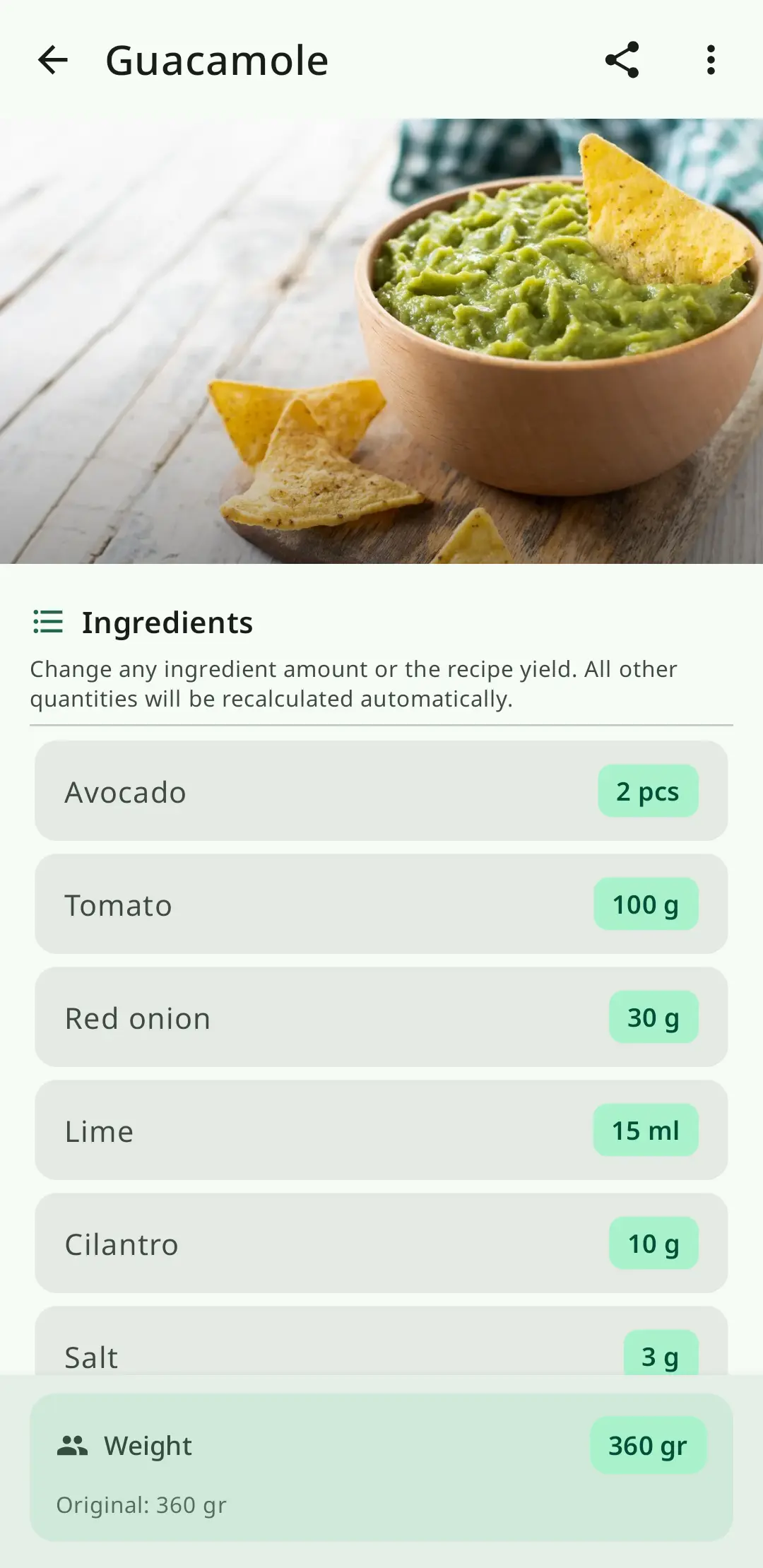
RecipeFlow's nutrition calculator uses ingredient-specific nutritional values and prompts you to specify raw vs. cooked weights where it matters.
Understanding Macronutrients
The three primary macronutrients in food:
Protein
Protein provides 4 calories per gram. It supports muscle building, repair, and satiety. Common sources in recipes: meat, fish, eggs, dairy, legumes, tofu, and tempeh. Most adults benefit from 0.8–1.6g protein per kg bodyweight daily.
Carbohydrates
Carbohydrates provide 4 calories per gram. They include sugars (simple) and starches/fiber (complex). Sources: grains, legumes, vegetables, fruits, sugar, and dairy. Fiber, while a carbohydrate, is not digested for energy and has its own nutritional benefits.
Fat
Fat provides 9 calories per gram — the most calorie-dense macronutrient. Sources: oils, butter, nuts, seeds, dairy, meat, and fish. Fat type matters: unsaturated fats (olive oil, avocado) are associated with better health outcomes than saturated or trans fats.
Calorie Calculation: The Detail That Matters
A common source of error in recipe calorie calculation is using cooked weights vs. raw weights. Many nutritional databases list values for raw ingredients. But a recipe often specifies cooked pasta or cooked rice, which weigh significantly more than the same ingredient dry.
- 100g dry pasta → approximately 200g cooked (2× weight gain)
- 100g dry rice → approximately 200–230g cooked
- 100g raw chicken breast → approximately 70–75g cooked (water loss)
- 100g raw spinach → approximately 90g cooked (minimal loss)
When entering recipe ingredients in RecipeFlow, specify whether quantities are raw or cooked. The app applies the correct nutritional values accordingly.
Nutrition Calculation for Dietary Goals
RecipeFlow's nutrition data supports several dietary planning approaches:
- Calorie counting: See the total calories per serving to manage daily intake.
- Macro tracking: Monitor protein, carbs, and fat ratios for fitness or body composition goals.
- Low-carb or keto: Quickly identify net carbs per serving.
- High-protein diets: Sort or filter recipes by protein content per serving.
- Weight management: Compare calorie density of different recipe options for the same meal type.
The combination of a recipe keeper with integrated nutrition data — rather than separate tracking in a food diary app — reduces friction and makes nutritional awareness a natural part of cooking, not an added chore.