
Common Uses for a Recipe Multiplier
A recipe multiplier is most useful when you need to make significantly more food than a standard recipe produces:
- Holiday baking: Multiplying cookie recipes to bake 10 dozen instead of 2 dozen.
- Batch cooking: Tripling a weeknight dinner to have leftovers for three days.
- Events and parties: Scaling a pasta salad from 6 to 40 servings.
- Food gifting: Making large batches of jam, granola, or cookies to package as gifts.
- Restaurant-style prep: Scaling home recipes to professional quantities for pop-up dinners or catering.
How to Multiply a Recipe Correctly
To multiply a recipe, apply the same scaling factor to every ingredient: new amount = original amount × multiplier.
For a 3× multiplication of a recipe calling for 2 cups flour, 1 tsp salt, and 3 eggs: you'd need 6 cups flour, 3 tsp salt, and 9 eggs. Simple in principle, but tedious for recipes with many ingredients and different units.
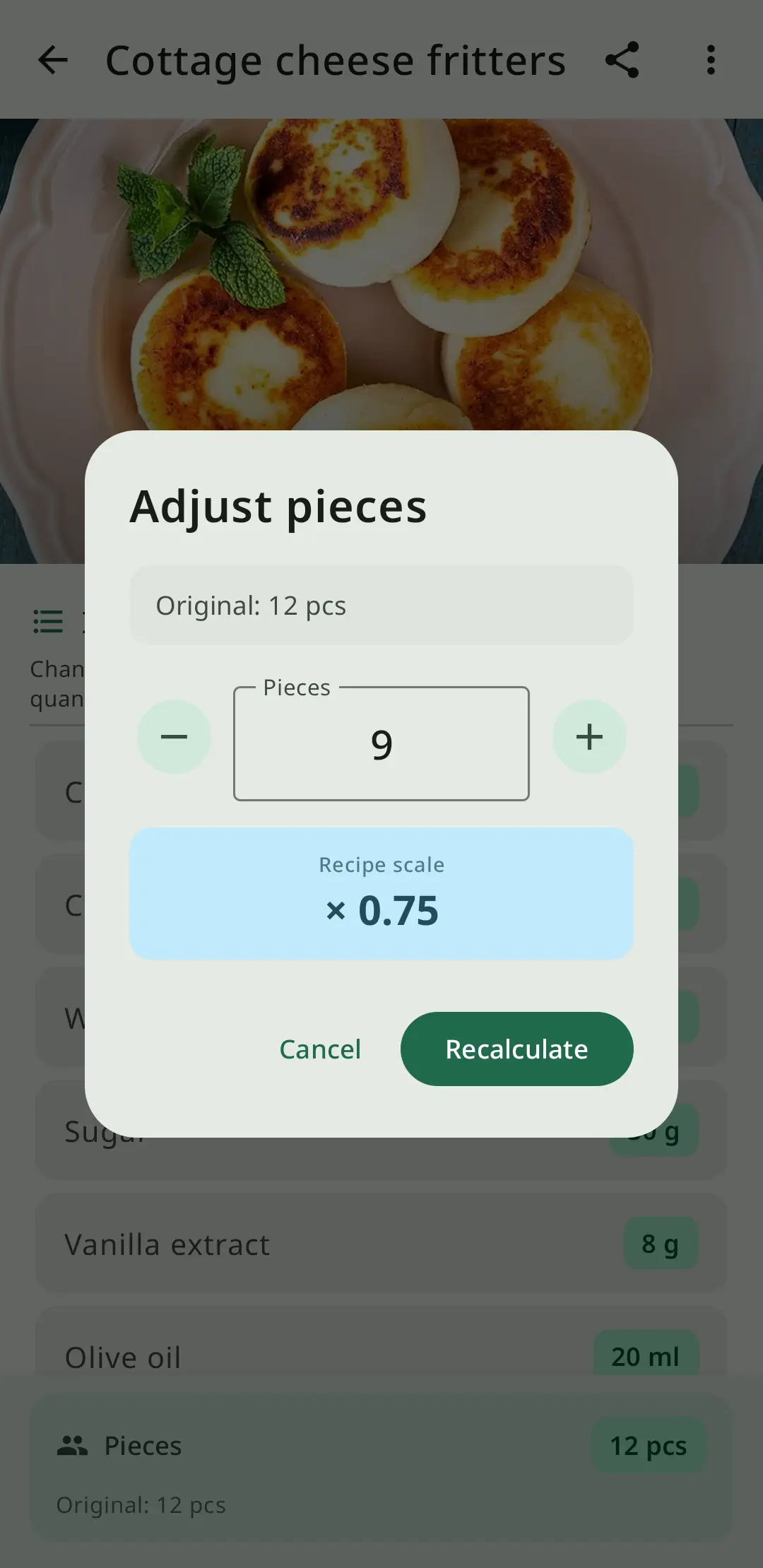
RecipeFlow's recipe multiplier applies this transformation to all ingredients simultaneously and converts unwieldy quantities into practical measures (6 cups flour rather than 96 tablespoons).
Baking Multiplier: Special Rules
When you multiply baking recipes by 3× or more, apply these adjustments:
- Leavening (baking powder, soda): Use 75–90% of the mathematically multiplied amount.
- Salt: Taste-test and start with 75% — add more if needed.
- Spices and extracts: Start with 80% of the multiplied amount; these are potent.
- Cooking time: Doesn't multiply — use visual cues and a thermometer.
Recipe Multiplier for Events and Catering
Calculating ingredients for an event is one of the most stressful kitchen math challenges. How much pasta do you need for 50 people? How many batches of cake batter fit in your oven?
A recipe multiplier answers the first question. For the second, you need to also account for your equipment capacity — oven size, pot size, mixing bowl volume.
A practical workflow for event cooking with RecipeFlow:
- Find your recipe in RecipeFlow (or add it).
- Set the serving count to your event size.
- Note the scaled ingredient quantities.
- Divide the total into manageable batches based on your largest pot, pan, or mixing bowl.
- Use the batch count and scaled ingredients to create your shopping list.