
Why Volume Measurements Are Unreliable for Baking
Volume measures like cups and tablespoons are practical for liquids but unreliable for dry ingredients. The key issue: density. A cup of all-purpose flour can weigh anywhere from 110g (lightly spooned) to 160g (firmly packed) depending on how it's measured. That 45g difference is significant enough to change the texture of baked goods completely.
A kitchen converter that uses weight (grams or ounces) eliminates this variable. When a recipe specifies 125g of flour, you get exactly 125g every time, regardless of how you handle the measuring cup.
This is why professional bakers, recipe developers, and food writers increasingly specify ingredients by weight — and why a good baking converter is essential when working with older volume-based recipes.
Cups to Grams: Reference Conversion Table
These values are approximate and based on standard US measuring cups (240ml per cup). Weights vary by brand, grind size, and packing method.
| Ingredient | 1 Cup (g) | ½ Cup (g) | ¼ Cup (g) | 1 Tbsp (g) |
|---|---|---|---|---|
| All-purpose flour | 120–125 | 60–63 | 30–31 | 8 |
| Bread flour | 127 | 64 | 32 | 8 |
| Cake flour | 100 | 50 | 25 | 6 |
| Whole wheat flour | 130 | 65 | 33 | 8 |
| Granulated sugar | 200 | 100 | 50 | 12 |
| Powdered sugar | 120 | 60 | 30 | 8 |
| Brown sugar (packed) | 220 | 110 | 55 | 14 |
| Butter | 227 | 113 | 57 | 14 |
| Cocoa powder | 85 | 43 | 21 | 5 |
| Rolled oats | 90 | 45 | 23 | 6 |
| Honey / syrup | 340 | 170 | 85 | 21 |
| Water / milk | 240 | 120 | 60 | 15 |
Volume to Weight: Other Common Conversions
Beyond cups and grams, kitchen recipes use a wide range of units:
Ounces to Grams
1 ounce (oz) = 28.35 grams. Common conversions: 2 oz = 57g, 4 oz = 113g, 8 oz = 227g, 16 oz (1 lb) = 454g. Fluid ounces (fl oz) measure volume: 1 fl oz = 29.6ml.
Milliliters to Cups
1 US cup = 240ml. Common: ¾ cup = 180ml, ½ cup = 120ml, ¼ cup = 60ml, 1 tablespoon = 15ml, 1 teaspoon = 5ml.
UK vs US Measurements
The UK imperial cup is 284ml vs the US 240ml. UK tablespoon = 17.7ml vs US 14.8ml. When following a British recipe, use a metric scale rather than US cup measures to avoid systematic errors throughout the recipe.
Ingredient-Specific Density: Why Generic Converters Fail
A generic volume-to-weight converter assumes a single density for 'flour' or 'sugar'. But different flour types (cake flour vs bread flour vs almond flour) have very different weights per cup. The same applies to sugars, nuts, and dried fruits.
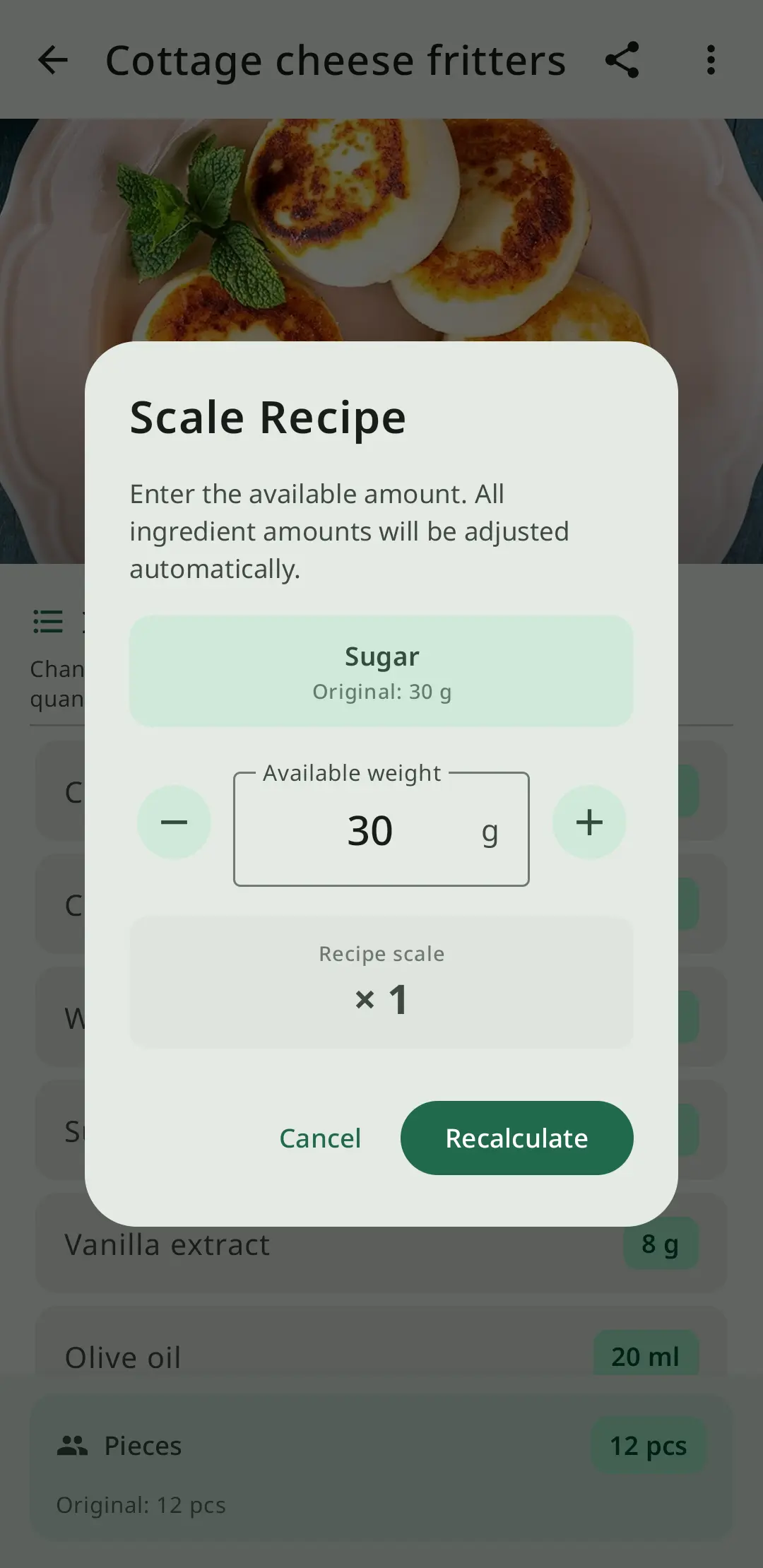
RecipeFlow's recipe converter uses ingredient-specific densities, giving you accurate conversions for hundreds of common ingredients. When you enter '1 cup bread flour', the app knows to use approximately 127g — not the generic 120g used for all-purpose flour.
This ingredient-aware approach is what separates a professional kitchen converter from a basic calculator, and it's built directly into every recipe in RecipeFlow.
Tips for More Accurate Recipe Measurements
Even with a good converter, measurement technique matters:
- Use a kitchen scale whenever possible. Weight is always more accurate than volume for dry ingredients.
- Spoon flour into the measuring cup, don't scoop. Scooping compresses flour and can add 20–30% more than intended.
- Level dry measures with a straight edge. A heaped tablespoon of baking powder can be 50% more than a leveled one.
- Use liquid measuring cups for liquids. Dry cup measures aren't accurate for liquids — use a glass jug with clear markings at eye level.
- Room temperature matters for butter. 'Softened' and 'melted' butter behave differently in recipes. The volume of each looks similar but the conversion to grams is the same.