
Cups to Grams: The Essential Conversion Table
All values assume standard US measuring cups (240ml). 'Spooned and leveled' means flour is spooned into the cup and leveled with a straight edge — not scooped directly from the bag.
| Ingredient | 1 Cup | ¾ Cup | ½ Cup | ⅓ Cup | ¼ Cup |
|---|---|---|---|---|---|
| All-purpose flour (spooned) | 120g | 90g | 60g | 40g | 30g |
| Bread flour | 127g | 95g | 64g | 42g | 32g |
| Cake flour | 100g | 75g | 50g | 33g | 25g |
| Whole wheat flour | 130g | 98g | 65g | 43g | 33g |
| Almond flour | 96g | 72g | 48g | 32g | 24g |
| Granulated sugar | 200g | 150g | 100g | 67g | 50g |
| Powdered sugar | 120g | 90g | 60g | 40g | 30g |
| Brown sugar (packed) | 220g | 165g | 110g | 73g | 55g |
| Unsalted butter | 227g | 170g | 113g | 76g | 57g |
| Cocoa powder | 85g | 64g | 43g | 28g | 21g |
| Rolled oats | 90g | 68g | 45g | 30g | 23g |
| Honey / maple syrup | 340g | 255g | 170g | 113g | 85g |
| Milk / water | 240g | 180g | 120g | 80g | 60g |
| Greek yogurt | 245g | 184g | 122g | 82g | 61g |
| Vegetable oil | 224g | 168g | 112g | 75g | 56g |
Tablespoons and Teaspoons to Grams
Small quantities are often measured in tablespoons and teaspoons. Here are the weight equivalents for common baking ingredients:
| Ingredient | 1 Tablespoon | 1 Teaspoon |
|---|---|---|
| All-purpose flour | 8g | 3g |
| Granulated sugar | 12g | 4g |
| Baking powder | 12g | 4g |
| Baking soda | 15g | 6g |
| Salt (fine) | 18g | 6g |
| Cocoa powder | 5g | 2g |
| Butter | 14g | 5g |
| Honey | 21g | 7g |
| Yeast (dry active) | 9g | 3g |
Why Cup Measurements Vary
The weight of 1 cup of flour can range from 110g to 160g depending on:
- Packing method: Scooping directly from the bag compresses flour, adding 20–30% more weight. Spooning and leveling is the standard technique.
- Flour type: Cake flour is lighter and finer; bread flour is denser. The same cup volume yields different weights.
- Humidity: Flour absorbs moisture from the air, increasing weight slightly in humid conditions.
- Settling: Flour that has settled in the bag or been shaken down is denser than freshly sifted flour.
This is why professional bakers and serious home bakers work in grams — it eliminates all of these variables and makes recipes reproducible.
How to Use This Converter for Baking Success
To convert a volume-based recipe to weights:
- Identify each volume measurement in the recipe (cups, tablespoons, teaspoons).
- Look up the ingredient in the conversion table above.
- Multiply by the appropriate fraction (e.g., ¾ cup × 120g/cup = 90g).
- Write the weight next to each ingredient.
- Weigh ingredients directly into your mixing bowl for minimal washing-up.
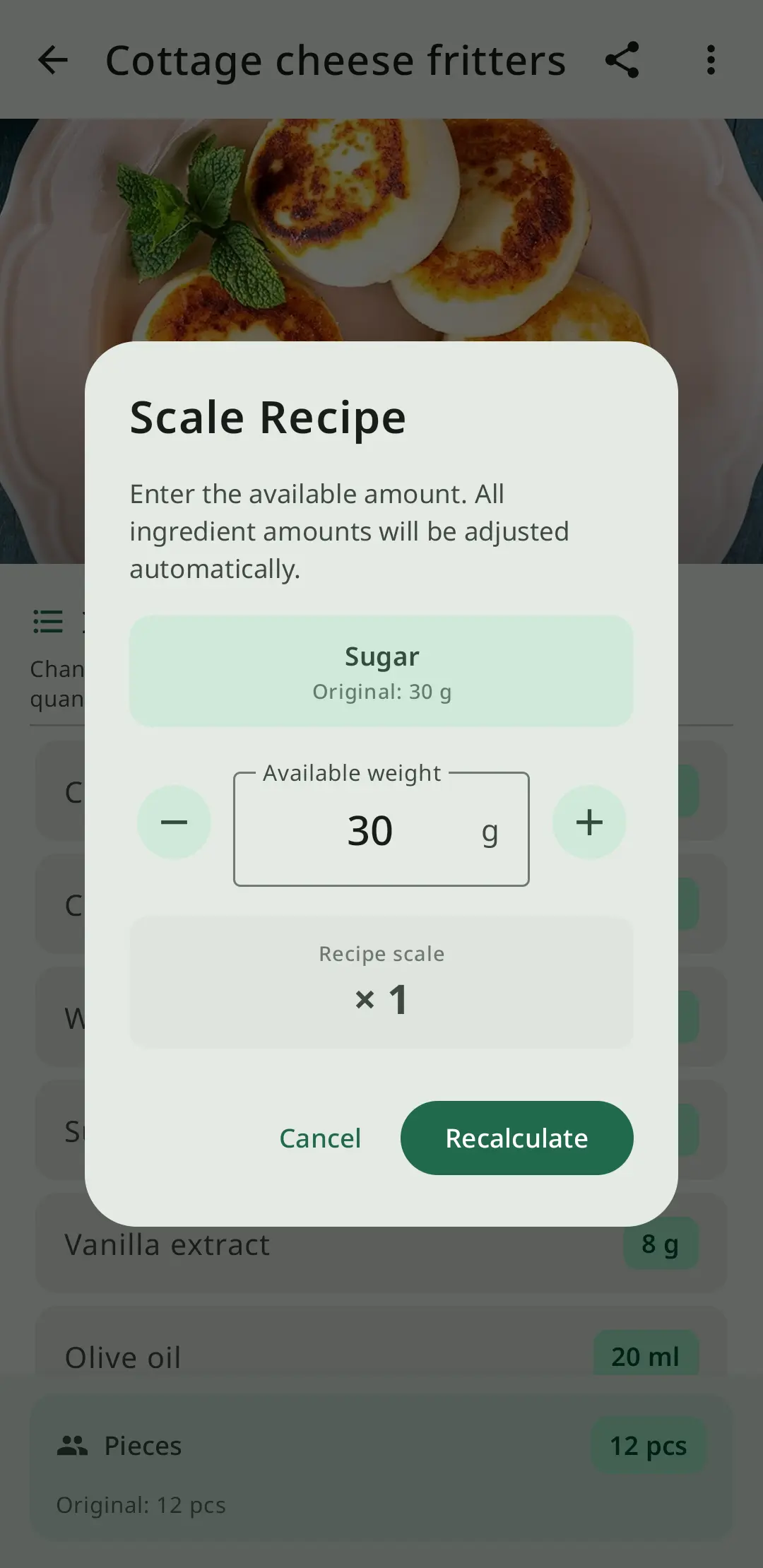
Once you've converted a recipe to grams, save it in RecipeFlow with weight-based quantities. The next time you make it, you have a precise, reproducible recipe that produces consistent results every time.