
Wie Cups in Gramm funktioniert
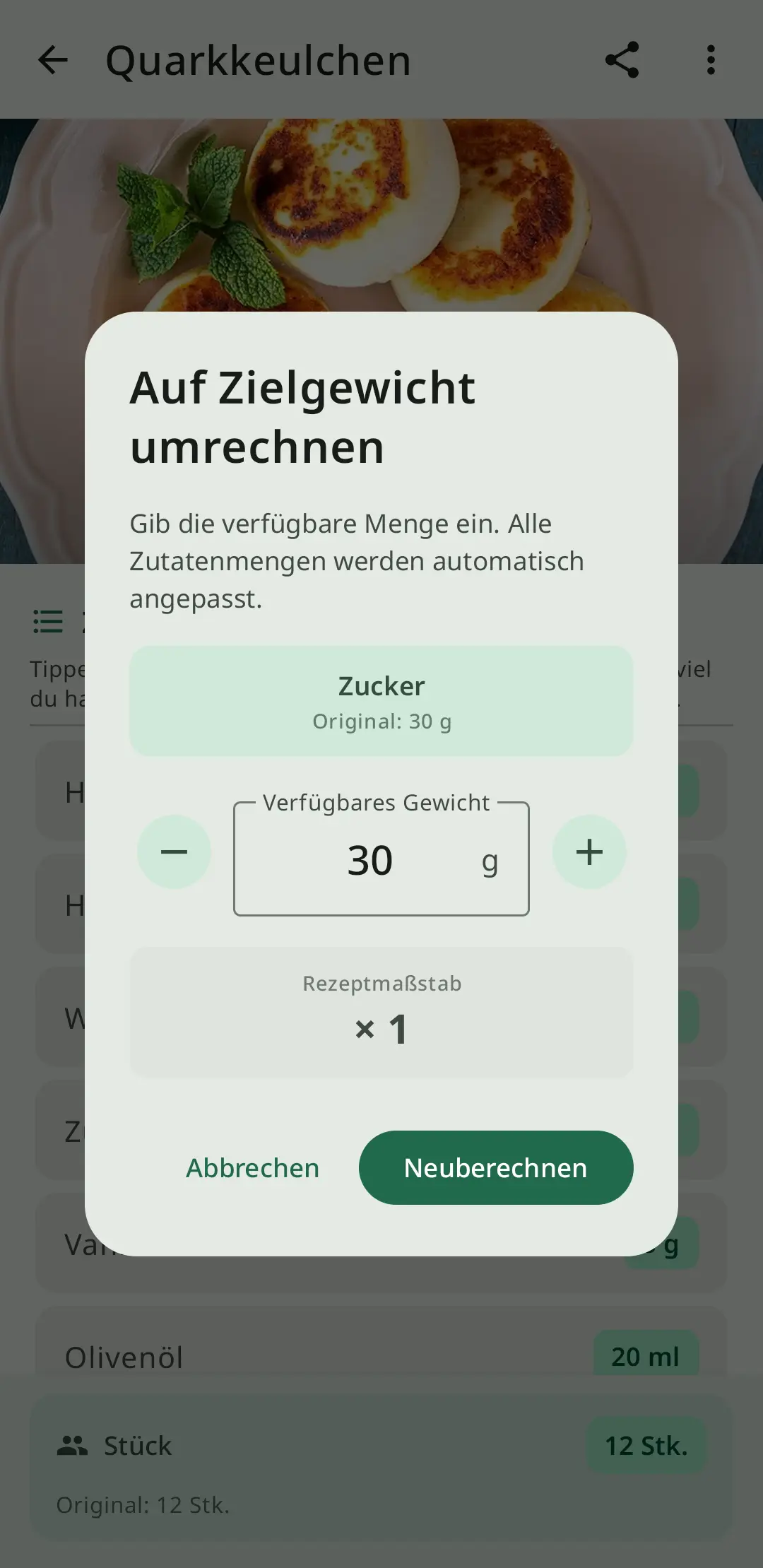
Amerikanische Rezepte verwenden häufig Cups, während professionelle Bäcker in Gramm arbeiten. RecipeFlow rechnet Cups in Gramm um und berücksichtigt dabei die Dichte jedes Zutatentyps.
Cups to Grams: The Essential Conversion Table (EN)
All values assume standard US measuring cups (240ml). 'Spooned and leveled' means flour is spooned into the cup and leveled with a straight edge — not scooped directly from the bag.
| Ingredient | 1 Cup | ¾ Cup | ½ Cup | ⅓ Cup | ¼ Cup |
|---|---|---|---|---|---|
| All-purpose flour (spooned) | 120g | 90g | 60g | 40g | 30g |
| Bread flour | 127g | 95g | 64g | 42g | 32g |
| Cake flour | 100g | 75g | 50g | 33g | 25g |
| Whole wheat flour | 130g | 98g | 65g | 43g | 33g |
| Almond flour | 96g | 72g | 48g | 32g | 24g |
| Granulated sugar | 200g | 150g | 100g | 67g | 50g |
| Powdered sugar | 120g | 90g | 60g | 40g | 30g |
| Brown sugar (packed) | 220g | 165g | 110g | 73g | 55g |
| Unsalted butter | 227g | 170g | 113g | 76g | 57g |
| Cocoa powder | 85g | 64g | 43g | 28g | 21g |
| Rolled oats | 90g | 68g | 45g | 30g | 23g |
| Honey / maple syrup | 340g | 255g | 170g | 113g | 85g |
| Milk / water | 240g | 180g | 120g | 80g | 60g |
| Greek yogurt | 245g | 184g | 122g | 82g | 61g |
| Vegetable oil | 224g | 168g | 112g | 75g | 56g |
Tablespoons and Teaspoons to Grams (EN)
Small quantities are often measured in tablespoons and teaspoons. Here are the weight equivalents for common baking ingredients:
| Ingredient | 1 Tablespoon | 1 Teaspoon |
|---|---|---|
| All-purpose flour | 8g | 3g |
| Granulated sugar | 12g | 4g |
| Baking powder | 12g | 4g |
| Baking soda | 15g | 6g |
| Salt (fine) | 18g | 6g |
| Cocoa powder | 5g | 2g |
| Butter | 14g | 5g |
| Honey | 21g | 7g |
| Yeast (dry active) | 9g | 3g |
Why Cup Measurements Vary (EN)
The weight of 1 cup of flour can range from 110g to 160g depending on:
- Packing method: Scooping directly from the bag compresses flour, adding 20–30% more weight. Spooning and leveling is the standard technique.
- Flour type: Cake flour is lighter and finer; bread flour is denser. The same cup volume yields different weights.
- Humidity: Flour absorbs moisture from the air, increasing weight slightly in humid conditions.
- Settling: Flour that has settled in the bag or been shaken down is denser than freshly sifted flour.
This is why professional bakers and serious home bakers work in grams — it eliminates all of these variables and makes recipes reproducible.
How to Use This Converter for Baking Success (EN)
To convert a volume-based recipe to weights:
- Identify each volume measurement in the recipe (cups, tablespoons, teaspoons).
- Look up the ingredient in the conversion table above.
- Multiply by the appropriate fraction (e.g., ¾ cup × 120g/cup = 90g).
- Write the weight next to each ingredient.
- Weigh ingredients directly into your mixing bowl for minimal washing-up.
Once you've converted a recipe to grams, save it in RecipeFlow with weight-based quantities. The next time you make it, you have a precise, reproducible recipe that produces consistent results every time.