
How to Calculate the Number of Servings
The basic formula: number of servings = total yield ÷ serving size.
- A 2-liter pot of soup with 400ml serving size = 5 servings.
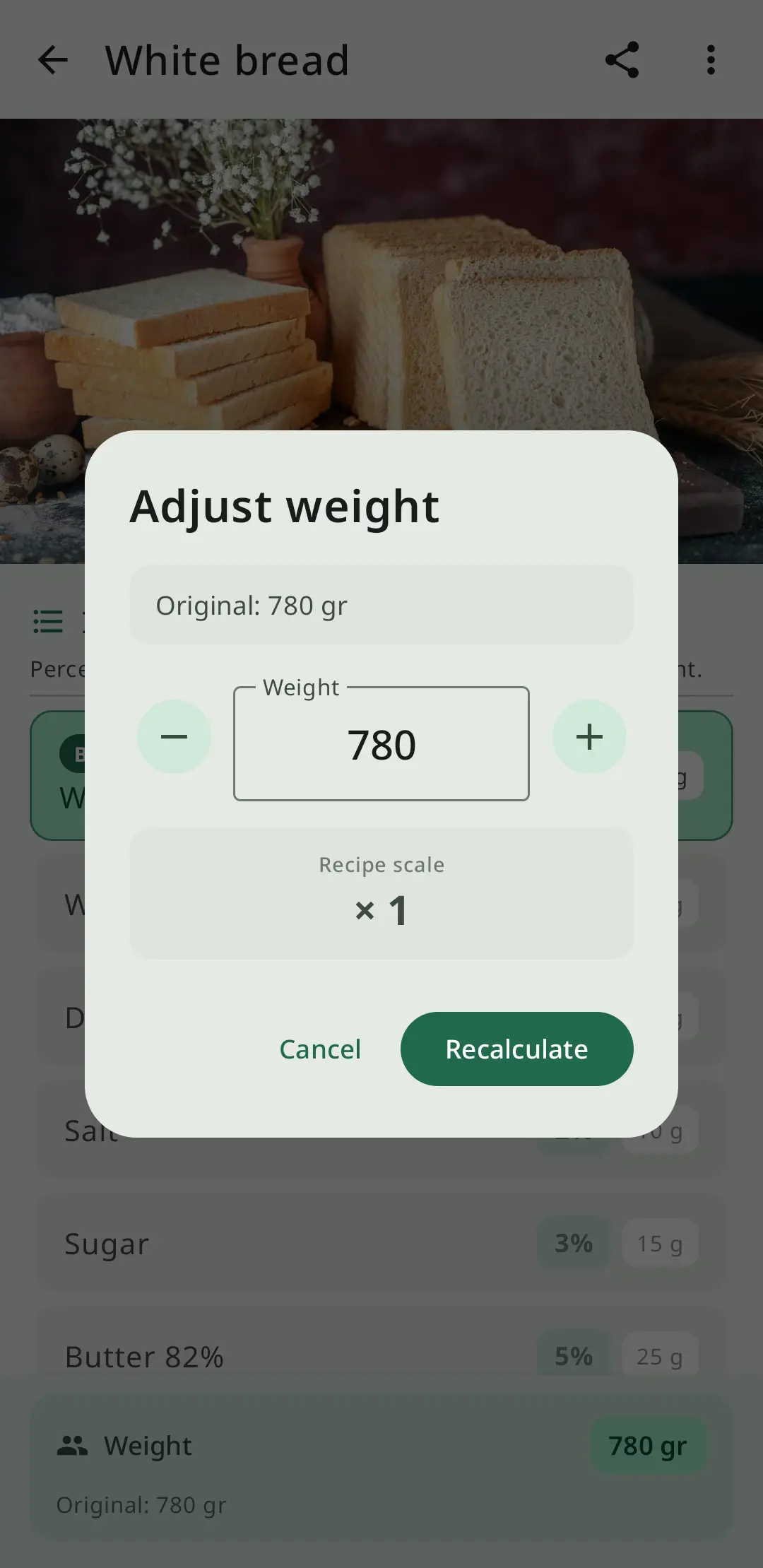
- A 900g loaf of bread with 60g per slice = 15 slices.
- A 20cm cake weighing 1.2kg with 100g slices = 12 slices.
The challenge is that total yield and serving size can be expressed in different units, and serving size standards vary by recipe type and cultural context. RecipeFlow handles unit conversion and provides standard serving size references for common recipe categories.
Serving Size Standards by Recipe Type
Standard serving sizes vary significantly by food category:
Soups and Stews
A starter/appetizer portion is 200–250ml. A main course portion is 350–450ml. A large main or meal-prep serving is 500–600ml. For a thick stew (higher calorie density), smaller servings are appropriate.
Pasta and Grains
Cooked pasta: 180–220g as a main, 100–120g as a side. Cooked rice: 150–200g as a side, 250–300g as a main. These weights are for the cooked state — dry pasta approximately doubles in weight when cooked.
Baked Goods
Cookies: 30–45g each. Muffins: 60–90g each. Cake slices: 80–120g. Bread slices: 25–35g for sandwich bread, 50–70g for artisan loaves. Brownies: 60–80g per square.
Proteins
Cooked chicken/beef/fish: 80–120g per serving as part of a balanced meal; 150–180g for larger appetites or high-protein diets. Tofu/tempeh: 100–140g per serving.
Calculating Servings for Bakeware Scaling
Baking presents a unique serving calculation challenge when you change pan sizes. Different pan dimensions produce different total yields, which changes both the number of servings and the per-serving size.
RecipeFlow includes a bakeware shape calculator that determines the correct scaling factor when you switch between:
- Round cake pans of different diameters
- Square and rectangular baking pans
- Loaf pans
- Bundt pans
Switching from a 9-inch to a 6-inch round cake pan, for example, reduces the volume by 56%. The recipe scales down by that factor, and the serving count changes accordingly.
Serving Calculator for Meal Planning
When building a meal plan in RecipeFlow, the serving calculator connects your recipes to your planning needs:
- You have a lasagna recipe that serves 8.
- You're cooking for a family of 4 and want 2 days of leftovers.
- That's 4 × 2 = 8 total servings needed — perfect as-is.
- If you only need dinner for tonight (4 people), scale to 4 servings.
The meal planner and serving calculator work together to eliminate both over-cooking (wasting food) and under-cooking (running out).